
How Brands Turn Lost Visitors into Buyers with Dynamic Remarketing & Retargeting
Apr 20, 2020 | By Ahmed Sohail
Understanding Remarketing vs Retargeting
Let me clear this up right now because I see this confusion everywhere.
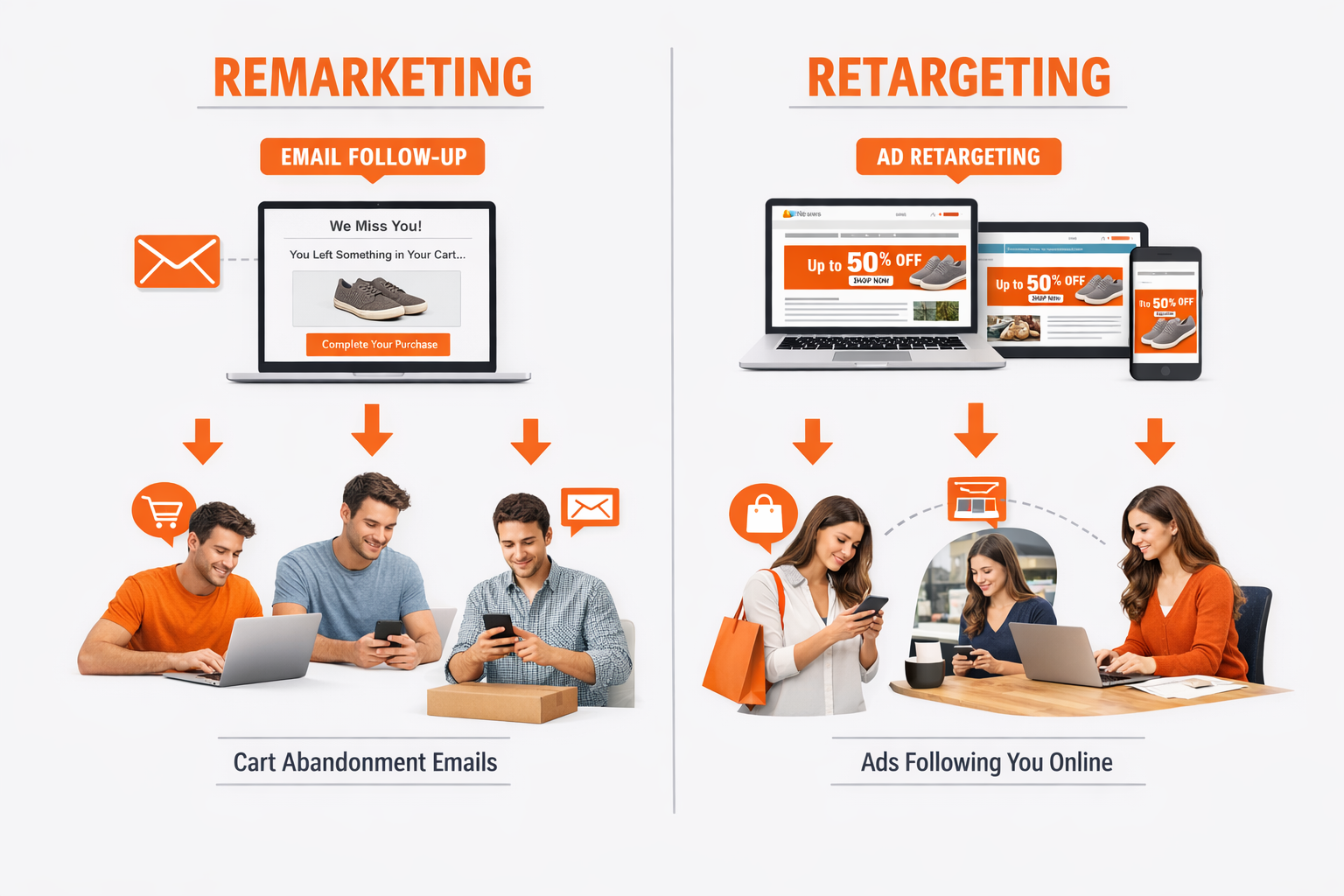
Retargeting uses display ads (think banner ads following you around the web) to bring people back to your site. You visit a shoe website, then suddenly you’re seeing those exact sneakers on news sites, blogs, and social media.
Remarketing focuses on email campaigns. Someone abandons their cart, and you send them targeted emails saying “Hey, you forgot something!”
But here’s the thing: Most marketers use these terms interchangeably now, and honestly, it doesn’t really matter what you call it. What matters is the strategy.
The real game-changer? Dynamic remarketing—showing people the exact products they viewed, personalized just for them.
| Section | What You’ll Learn |
|---|---|
| Why This Matters (Stats) | Eye-opening statistics that prove ROI |
| Best Industries | 7 sectors where this strategy crushes it |
| Ecommerce Strategies | Tactical playbook for online stores |
| Travel & Hospitality | Booking recovery techniques |
| SaaS & B2B | Long sales cycle strategies |
| Finance & Insurance | Compliance-friendly approaches |
| Real Estate | High-ticket conversion tactics |
| Healthcare | HIPAA-compliant methods |
| Retail & Fashion | Seasonal campaign tactics |
| Tools & Platforms | Complete tech stack breakdown |
| Advanced Tactics | Expert-level optimization |
| Real Results | Case Studies That Prove It Works |
| FAQ’s | Your Burning Questions Answered |
| The Bottom Line | Why This Works When Done Right |
| Ready to Stop | Leaving Money on the Table? |
| About the Author | |
The Numbers Don’t Lie: Why This Strategy Works
Look, I could tell you retargeting is effective, but let me show you the data:
The Reality Check:
- 97% of first-time visitors leave your website without buying anything
- Retargeted users are 43% more likely to convert than first-time visitors
- Shopping cart abandonment rates average 77.24%, but businesses use retargeting to reduce this by 26%
The ROI That Makes CFOs Smile:
- Retargeting campaigns can boost conversion rates by 161%
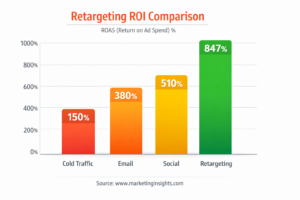
- Retargeting delivers a 10x return on ad spend on average
- Dynamic remarketing ads can increase revenue by 40% and boost conversion rates by 3x
- Retargeting campaigns deliver 50% lower cost per acquisition than traditional search ads
Brand Impact:
- Retargeting boosts brand recall by 57%
- 70% of marketers opt for retargeting primarily for brand awareness
- 26% of website visitors return due to remarketing
Platform Performance:
- 77% of advertisers use retargeting on Facebook and Instagram to win back potential customers
- Retargeting reduces cart abandonment by 6.5%
- 56% of shoppers return within a week of seeing a retargeted ad
These aren’t flukes. This is systematic, predictable, scalable revenue.
Which Industries Benefit Most from Dynamic Remarketing?
Not all industries see the same results. After analyzing hundreds of campaigns, here’s what actually works:
1. Ecommerce & Retail (The Gold Standard)
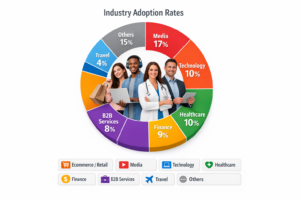
Retail uses retargeting strategies more than any other industry at 27%, and for good reason. When someone browses your products, they’re showing purchase intent.
Why It Works:
- Visual products sell better with visual reminders
- Purchase consideration period is typically 3-7 days
- Easy to show exact products viewed
- High volume of traffic = more data
Best Performers:
- Fashion & apparel
- Electronics
- Home goods
- Beauty products
2. Travel & Hospitality (High-Intent, High-Value)
Travel bookings have one of the longest consideration periods—people research extensively before booking.
Travel companies like Bravofly, Atrápalo and Interpark Tour increased ROI and conversion rates using dynamic retargeting.
Why It Works:
- Average booking value: $500-$3,000
- Decision cycle: 2-6 weeks
- High cart abandonment (comparing prices across sites)
- Emotional purchase (vacation = excitement)
3. SaaS & Technology (Long Sales Cycles)
10% of tech companies actively use retargeting strategies, but those who do it right see massive returns.
Why It Works:
- Decision makers research for weeks/months
- Multiple touchpoints needed (7-13 on average)
- High lifetime value justifies higher CPAs
- Can nurture with educational content
4. Finance & Insurance
8% of finance companies leverage retargeting, often because of compliance concerns. But those who navigate regulations see incredible results.
Why It Works:
- High-value conversions (loans, insurance policies)
- Long consideration periods
- Trust-building through repeated exposure
- Can segment by life events (home purchase, marriage, etc.)
5. Real Estate
Real estate transactions are among the highest-value conversions you can drive.
Why It Works:
- Ultra-high ticket (average home: $400K+)
- Long sales cycles (3-6 months typical)
- Heavy research phase
- Emotional decision-making
6. Healthcare & Medical
HIPAA compliance makes this tricky, but possible with proper setup.
Why It Works:
- High-value services (elective procedures, ongoing treatment)
- Research-heavy audience
- Local targeting capabilities
- Trust-building through expertise content
7. B2B Services & Manufacturing
Complex sales requiring multiple decision-makers.
Why It Works:
- Ultra-long sales cycles (6-18 months)
- High contract values
- Multiple stakeholders need nurturing
- Can segment by company size, industry, role
Ecommerce Retargeting Strategies (Tactical Playbook)
Let’s get practical. Here’s exactly how to set up campaigns that print money:
Strategy 1: Cart Abandonment Recovery
The Setup:
- Pixel fires when item added to cart
- Create audience: “Added to cart but didn’t purchase”
- Exclude: Recent purchasers (last 7 days)
The Campaign:
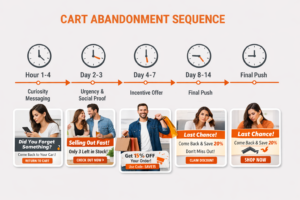
- Hour 1-4: Show the exact product with “Still thinking it over?”
- Hour 4-24: Add social proof: “478 people bought this today”
- Day 2-3: Introduce urgency: “Only 3 left in stock”
- Day 4-7: Offer incentive: “Here’s 10% off to complete your order”
- Day 8-14: Final push: “Last chance—your cart expires soon”
Pro Tip: Don’t start with the discount. You’re training people to abandon carts for discounts. Build desire first.
Strategy 2: Browse Abandonment Campaigns
Target people who viewed products but didn’t add to cart.
The Audience:
- Viewed product pages
- Didn’t add to cart
- Exclude cart abandoners (they get different messaging)
The Creative:
- Show products viewed + complementary items
- Use lifestyle imagery (product in use)
- Add reviews/ratings
- Include free shipping if you offer it
Strategy 3: Dynamic Product Ads (DPA)
This is where magic happens. Dynamic retargeting showing specific products users viewed increases conversion rates by 3x.
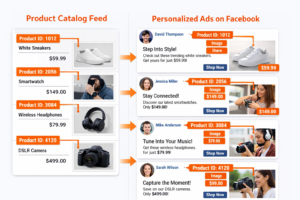
How It Works:
- Create product catalog (Facebook, Google Merchant Center)
- Install pixel with product ID tracking
- Platform automatically shows products viewed
- Dynamically updates pricing, availability, images
Example Product Feed Must-Haves:
- Product ID (unique)
- Product name
- Description (50-150 characters optimized)
- Image URL (1200x1200px minimum)
- Product URL
- Price
- Availability
- Brand
- Category
Strategy 4: Cross-Sell & Upsell to Customers
Don’t stop after the first purchase. That’s leaving money on the table.
Post-Purchase Windows:
- Days 7-14: Complementary products
- Bought running shoes? → Show running socks, fitness tracker
- Days 14-30: Related categories
- Bought camera? → Show lenses, tripod, camera bag
- Days 30-60: Replenishment (if applicable)
- Bought skincare? → “Time to restock?”
- Days 60-90: New arrivals in categories they’ve purchased
Example: Customer buys coffee maker:
- Week 1: Coffee pods, grinder
- Week 2: Travel mug, coffee scoop
- Week 3: “New espresso maker just arrived”
Strategy 5: Seasonal Reactivation
Target past customers during peak seasons.
Holiday Campaign Calendar:
- Black Friday: Everyone who purchased in last 365 days
- Cyber Monday: Cart abandoners from Black Friday
- Christmas: Gift-focused messaging to past buyers
- New Year: Fitness/health products to health-conscious customers
- Valentine’s Day: Romance/gift categories to past gift buyers
Travel & Hospitality Retargeting Tactics
Travel is unique. People research across dozens of sites before booking.
Strategy 1: Flight/Hotel Price Drop Alerts
The Hook: “That Paris hotel you looked at? Price just dropped $89/night.”
Implementation:
- Track specific properties/flights viewed
- Monitor price changes
- Trigger ads when prices decrease
- Add scarcity: “3 rooms left at this price”
Strategy 2: Multi-City Targeting
Someone researching Tokyo probably isn’t just looking at one destination.
The Approach:
- Cluster destinations (Japan → Tokyo, Kyoto, Osaka)
- Show related destinations
- “Planning Japan? Don’t miss these cities”
- Package deals across destinations
Strategy 3: Seasonal Intent Campaigns
Summer Vacation (December – February research):
- Target warm destinations
- Beach resorts, tropical locations
- “Book now, travel June-August”
Winter Holidays (September – November research):
- Ski resorts, Christmas markets
- “Early bird rates ending soon”
Strategy 4: Abandoned Booking Recovery
Average cart abandonment in travel: 81% (according to SaleCycle reports).
The Sequence:
- Hour 1: “Complete your booking—held for 24 hours”
- Hour 12: “Price may increase—book now”
- Day 2: “Similar properties are filling up fast”
- Day 3: Show alternative properties (similar price/location)
- Day 7: “Last call—your dates are popular”
SaaS & B2B Retargeting (Long Sales Cycle Mastery)
B2B is different. You’re not selling impulse purchases; you’re nurturing decision-makers through a complex buying process.
Strategy 1: Free Trial Abandonment
Someone signs up for your trial but never logs in? That’s your hottest lead.
The Campaign:
- Day 1: “Get started in 5 minutes” (tutorial video)
- Day 3: “See why [competitor alternative] switched to us”
- Day 5: “Book a 1-on-1 demo with our team”
- Day 10: Case study: Similar company’s results
- Day 14: “Trial ending—upgrade now, save 20%”
Strategy 2: Content-Based Nurturing
Not everyone’s ready to buy. Nurture with value.
The Ladder:
- Blog visitors: Retarget with related blog posts
- Guide downloaders: Show case studies
- Case study viewers: Offer product demos
- Demo attendees: Show pricing/comparison content
- Pricing page visitors: Direct sales outreach + retargeting
LinkedIn is particularly effective for SaaS with targeting by job title, company size, and industry, making it perfect for Account-Based Marketing.
Strategy 3: Account-Based Retargeting
Target specific companies, not just individuals.
The Process:
- Upload target account list (200-500 companies)
- Create LinkedIn matched audiences
- Serve personalized ads by:
- Company size (SMB vs Enterprise messaging)
- Industry (healthcare SaaS vs retail SaaS)
- Role (CEO vs IT Manager)
Strategy 4: Feature-Specific Campaigns
Someone viewed your pricing page? Show them the specific features they’re likely interested in.
Example Journey:
- Viewed “Analytics” feature page
- Retarget with: “How [Client] increased ROI 300% with our analytics”
- Next: “Live demo: Analytics dashboard walkthrough”
- Final: “Start analyzing today—14-day trial”
Finance & Insurance Sector (High-Value, High-Compliance)
Financial services have regulations, but also massive lifetime values.
Strategy 1: Life Event Targeting
Combine retargeting with life event data (where permitted).
Key Events:
- Home purchase → Homeowners insurance, mortgage refinancing
- Marriage → Life insurance, joint accounts
- New baby → College savings plans, life insurance
- Job change → 401(k) rollover, financial planning
- Retirement → Wealth management, annuities
Strategy 2: Educational Content Funnel
You can’t directly advertise loans with aggressive retargeting. Build trust first.
The Sequence:
- Awareness: “5 Ways to Improve Your Credit Score” (blog)
- Interest: “Mortgage Pre-Approval Checklist” (PDF download)
- Consideration: “How Much House Can You Afford?” (calculator)
- Intent: “Current Mortgage Rates” (landing page)
- Decision: “Apply Now—Get Approved in 10 Minutes”
Strategy 3: Application Abandonment
Someone starts a loan application but doesn’t finish? High intent.
The Recovery:
- Hour 1: Email + ad: “Save your progress—complete in 3 minutes”
- Hour 6: “Need help? Call us” (phone number prominent)
- Day 1: Show trust signals (awards, ratings, security badges)
- Day 3: Simplified application option: “Quick approval—less info needed”
- Day 7: Competitive angle: “See if you qualify for better rates”
Real Estate Retargeting (Ultra-High-Ticket Conversions)
The average home sale commission: $15,000-$30,000. One conversion pays for your entire annual ad budget.
Strategy 1: Property-Specific Campaigns
The Setup:
- Tag visitors by property viewed
- Create unique audience per listing
- Show that exact property in ads
The Ad:
- Property photos (multiple angles)
- Key details: beds, baths, sqft, price
- Neighborhood highlights
- “Schedule a showing—3 slots left this week”
- Open house notifications
Strategy 2: Neighborhood Targeting
Someone views homes in Suburb A but doesn’t inquire?
Expand the Net:
- Show similar homes in that neighborhood
- Highlight area: schools, commute times, amenities
- Price comparison: “More space for less in [Nearby Area]”
- Virtual tour options
Strategy 3: Buyer Journey Segmentation
Audience Tiers:
- Early Browsers: Viewed 1-2 listings
- Message: Neighborhood guides, buying process content
- Active Searchers: Viewed 5+ listings
- Message: New listings matching their criteria
- High Intent: Viewed same listing 3+ times
- Message: “This home is generating interest—schedule showing”
- Price Sensitive: Viewed only listings in specific range
- Message: Financing options, down payment assistance
Strategy 4: Sold Property Follow-Up
The listing they loved just sold? Don’t lose them.
The Campaign:
- “Similar homes just listed”
- Same neighborhood, price range, features
- “Get notified when homes like this hit the market”
- Capture email for MLS alerts
Healthcare Strategies (HIPAA-Compliant Remarketing)
Healthcare is tricky. You must follow HIPAA regulations.
What You CAN’T Do:
- Track visitors on patient portals
- Target based on health conditions viewed
- Use standard Facebook pixel on protected pages
- Store personally identifiable health information
What You CAN Do:
Strategy 1: General Health Content Retargeting
Safe Audiences:
- Blog visitors (general health topics)
- Service page viewers (non-diagnostic)
- Location page visitors
- About us / team page visitors
The Approach:
- “Learn more about [condition treatment]”
- “Meet our specialists”
- “Patient testimonials” (with consent)
- “Virtual consultation available”
Strategy 2: Location-Based Campaigns
Someone visited your clinic’s website?
The Retarget:
- Facility tours
- Patient reviews
- Insurance accepted
- “Book your appointment—online scheduling”
- Wait times / availability
Strategy 3: Service-Specific (Non-PHI)
You can target broadly without using protected information.
Safe Targeting:
- Viewed “knee replacement surgery” page
- Retarget with: Orthopedic surgeon credentials, patient outcomes
- Viewed “pediatric care” page
- Retarget with: Meet our pediatricians, parent resources
Retail & Fashion Approaches (Trend-Driven Strategies)
Fashion moves fast. Your retargeting needs to match that pace.
Strategy 1: Size/Style Matching
Someone viewed XL hoodies in black?
Smart Retargeting:
- Show more XL items (they’re XL)
- Show more black items (color preference)
- Show more hoodies (style preference)
- Exclude sizes they don’t wear
Strategy 2: Occasion-Based Campaigns
Seasonal Targeting:
- Wedding Season (April-October):
- Viewed dresses? → Show accessories, shoes
- “Complete your wedding guest look”
- Back to School (July-September):
- Parents viewing kids’ clothes
- “New arrivals for fall semester”
- Holiday Party Season (November-December):
- Viewed formal wear?
- “Holiday party outfits—trending now”
Strategy 3: New Arrivals to Past Buyers
This is simple but powerful.
The Campaign:
- Segment: Purchased in last 90 days
- Message: “New [category] just dropped”
- Show: Latest items in categories they’ve bought
- Include: Early access, exclusive preview
Strategy 4: Out-of-Stock Retargeting
Someone viewed an out-of-stock item? Capture that demand.
The Sequence:
- “Back in stock alert—sign up”
- Capture email
- When restocked: Email + retargeting ad
- Add urgency: “Limited restock—shop now”
Essential Tools & Platforms (Your Tech Stack)
Let me break down the platforms that actually matter, based on your industry.
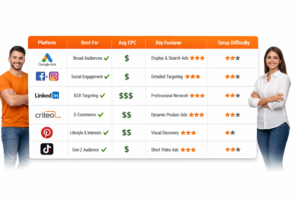
Ecommerce:
Must-Have:
- Google Ads: Display Network + Shopping
- Why: Massive reach, intent-based targeting
- Cost: $0.50-$2.00 CPC average
- Facebook/Instagram Ads: Dynamic Product Ads
- Why: Visual products, detailed targeting
- Cost: $0.50-$3.00 CPC average
- Criteo: Specializes in AI-powered dynamic retargeting especially for ecommerce
- Why: Cross-device tracking, product recommendations
- Cost: Performance-based (% of sales)
Nice-to-Have:
- Pinterest Ads: High-intent visual searches
- TikTok Ads: Younger audience (Gen Z)
- Snapchat Ads: 13-24 age group
B2B/SaaS:
Must-Have:
- LinkedIn Ads: Target by job title, company size, industry, perfect for Account-Based Marketing
- Why: Professional targeting unavailable elsewhere
- Cost: $5-$10 CPC average (higher but worth it)
- Google Ads: Search + Display
- Why: Intent keywords, remarketing lists for search
- Cost: $2-$6 CPC average
- Facebook Ads: Broad reach, detailed interests
- Cost: $1-$4 CPC average
Nice-to-Have:
- Twitter/X Ads: Tech-savvy audiences
- Quora Ads: Question-intent targeting
- Reddit Ads: Community-specific targeting
Travel:
Must-Have:
- Google Ads: Travel-specific features
- Hotel Ads, Flight Ads
- Facebook/Instagram: Visual storytelling
- TripAdvisor: Direct travel intent
Nice-to-Have:
- Pinterest: Destination inspiration
- YouTube: Video destination marketing
Local Services (Healthcare, Real Estate, Home Services):
Must-Have:
- Facebook/Instagram: Local targeting, custom audiences
- Google Ads: Local search campaigns, GDN
- YouTube: Video testimonials, service explanations
Nice-to-Have:
- Nextdoor Ads: Hyperlocal targeting
- Waze Ads: Navigation-based local
Advanced Retargeting Tactics (Expert-Level)
Ready to go deeper? These strategies separate good campaigns from great ones.
Tactic 1: Sequential Messaging
Don’t show the same ad 500 times. Tell a story.
The Sequence:
- Ad 1 (Impressions 1-3): Problem awareness
- “Tired of [pain point]?”
- Ad 2 (Impressions 4-7): Solution introduction
- “Meet [product]—designed to solve [problem]”
- Ad 3 (Impressions 8-12): Social proof
- “Join 50,000 customers who solved [problem]”
- Ad 4 (Impressions 13-20): Urgency/Offer
- “Last chance: 20% off ends tonight”
Tactic 2: Frequency Capping (Don’t Be Annoying)
There’s a fine line between “staying top of mind” and “stalking.”
Best Practices:
- Maximum: 5 impressions per person per day
- Optimal: 2-3 impressions per person per day
- Time decay: Reduce frequency after 7 days
- Days 1-7: 3 ads/day
- Days 8-14: 2 ads/day
- Days 15-30: 1 ad/day
- Days 30+: 1 ad/week
Tactic 3: Cross-Device Targeting
Someone browses on mobile during lunch, buys on desktop at home.
The Setup:
- Facebook: Automatic cross-device
- Google: Enable “Optimize for conversions”
- Email: Include mobile-friendly designs
The Strategy:
- Mobile ads → Drive to app download or mobile-optimized site
- Desktop ads → Detailed information, comparisons
- Tablet ads → Longer-form content, videos
Tactic 4: Weather-Triggered Retargeting
Use weather to personalize messaging.
Examples:
- Cold snap? Retarget with: Winter coats, heaters, hot chocolate
- Heatwave? Retarget with: AC units, fans, cold beverages
- Rainy forecast? Retarget with: Umbrellas, rain boots, indoor activities
Tactic 5: Competitive Conquesting
Someone visited your competitor? Target them.
How:
- Create audience: Visited competitor domain
- Message: “Considering [Competitor]? Here’s why we’re better”
- Show: Side-by-side comparison, price advantage, unique features
Compliance Note: Don’t use competitor trademarks in ad copy. Focus on comparative value.
Tactic 6: Lookalike Audience Expansion
Once you have converters, find more people like them.
The Process:
- Create seed audience: Purchasers (minimum 100 people)
- Build lookalike: 1% (most similar)
- Test incrementally: 1% → 2% → 5% → 10%
- Monitor quality: Does CPA stay consistent?
Pro Tip: Lookalikes work best with 1,000+ seed audience size. Below that, not enough data to be accurate.
Common Mistakes Killing Your Campaigns
Let me save you from the mistakes I see every day.
Mistake 1: Retargeting 100% of Visitors
The Problem: Someone landed on your site by accident and bounced in 5 seconds. Should you spend money retargeting them? No.
The Fix:
- Set minimum engagement threshold:
- Time on site: 30+ seconds
- Pages viewed: 2+
- Scroll depth: 50%+
- Exclude: High bounce rate pages (about us, careers, etc.)
Mistake 2: One-Size-Fits-All Creative
The Problem: Showing the same ad to someone who viewed your homepage vs someone who abandoned their cart.
The Fix:
- Segment by intent:
- Homepage visitors: Brand awareness, value proposition
- Category browsers: Category-specific benefits
- Product viewers: That specific product
- Cart abandoners: Product + incentive/urgency
Mistake 3: No Exclusion Lists
The Problem: Wasting budget showing ads to people who already converted.
The Fix:
- Exclude:
- Recent purchasers (last 7-30 days)
- Current customers (for acquisition campaigns)
- Employees (use IP exclusion)
- Low-value segments (bounced <5 seconds)
Mistake 4: Ignoring Mobile Users
The Stats: 70% of all customers used their mobiles to search ecommerce sites in 2023, and 57% of all ecommerce purchases are completed via mobile devices.
The Fix:
- Mobile-first creative (vertical 9:16 for stories)
- Click-to-call buttons prominent
- Fast-loading landing pages (<3 seconds)
- Large buttons (minimum 44×44 pixels)
Mistake 5: Starting with a Discount
The Problem: You’re training people to abandon carts and wait for the discount.
The Fix:
- Days 1-3: Value, urgency (stock levels), social proof
- Days 4-7: If no conversion, then offer discount
- Alternative: Free shipping instead of % off
Mistake 6: Retargeting Too Long
The click-through rate of retargeted ads drops by almost 50% after five months.
The Fix:
- Ecommerce: 30-day window
- B2B/SaaS: 60-90 day window
- High-ticket (real estate, cars): 180-day window
- After window: Move to lookalike campaigns instead
Mistake 7: No A/B Testing
The Problem: Running the same creative for months without testing.
The Fix: Test everything:
- Headline (benefit-driven vs curiosity-driven)
- Image (product vs lifestyle vs infographic)
- CTA (“Buy Now” vs “Shop Sale” vs “Learn More”)
- Format (single image vs carousel vs video)
Testing Cadence: Rotate creative every 2 weeks minimum
Mistake 8: Ignoring Ad Fatigue
The Problem: CTR drops, CPC rises, people get annoyed.
The Signs:
- CTR declining week-over-week
- CPC increasing
- Negative comments on ads
The Fix:
- Refresh creative every 2-3 weeks
- Monitor frequency (keep under 5 per week)
- Pause ads after 20 impressions per person
Real Results: Case Studies That Prove It Works
Let me show you what’s possible when you get this right.
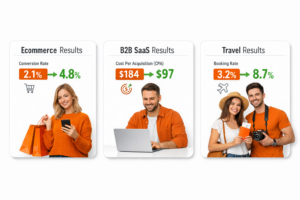
Case Study 1: Ecommerce Fashion Brand
Background:
- Mid-sized fashion retailer
- 150,000 monthly visitors
- 2.1% baseline conversion rate
- 68% cart abandonment rate
Implementation:
- Dynamic product ads (exact items viewed)
- Cart abandonment email + ad sequence
- Category-specific retargeting
- Free shipping threshold messaging
Results (90 days):
- Conversion rate: 2.1% → 4.8% (+129%)
- Cart abandonment: 68% → 51% (-25%)
- ROAS: 847% (8.47x return)
- Revenue attributed to retargeting: $287,000
Key Insight: The sequential messaging worked. No discount in first 3 days, just urgency and social proof. Discount only offered on day 5+ if no conversion.
Case Study 2: B2B SaaS Company
Background:
- Project management software
- $49/month subscription
- 90-day average sales cycle
- Multiple decision-makers
Implementation:
- LinkedIn retargeting (job title specific)
- Content ladder (blog → case study → demo)
- Free trial abandonment recovery
- Account-based targeting (200 companies)
Results (6 months):
-
- Free trial conversions: 11% → 23% (+109%)
- Demo booking rate: +67%
- Cost per acquisition: $184 → $97 (-47%)
- Annual contract value increase: +$340,000
Key Insight: LinkedIn targeting by job title allowed personalized messaging. CEOs saw ROI content, IT Managers saw integration capabilities, Team Leads saw collaboration features.
Case Study 3: Travel Agency
Background:
- Boutique travel agency
- Focus on European tours
- $3,500 average booking value
- High research-to-booking ratio (30:1)
Implementation:
- Destination-specific campaigns
- Price drop notifications
- Abandoned booking recovery
- Multi-city package suggestions
Results (4 months):
- Booking rate: 3.2% → 8.7% (+172%)
- Average order value: $3,500 → $4,100 (+17%)
- ROAS: 1,240% (12.4x return)
- Abandoned bookings recovered: 26%
Key Insight: Price drop alerts worked incredibly well. When a flight or hotel price decreased, triggering an ad with “Price dropped $127 since your visit” drove immediate conversions.
FAQs: Your Burning Questions Answered
Q1: How much should I budget for retargeting campaigns?
Start with 20-30% of your total ad budget. If you’re spending $5,000/month on ads, allocate $1,000-$1,500 to retargeting.
As you prove ROI, scale it up. Many mature ecommerce brands spend 40-50% on retargeting because the ROI is 2-3x higher than cold traffic.
Budget by Industry:
- Ecommerce: $500-$2,000/month minimum
- B2B/SaaS: $1,000-$5,000/month minimum
- Local services: $300-$1,000/month minimum
Remember: Retargeting is cheaper (50% lower CPC) than cold acquisition, so your budget goes further.
Q2: What’s a good conversion rate for retargeting campaigns?
Benchmarks by Industry:
- Ecommerce: 2-5% (cart abandoners: 8-12%)
- B2B/SaaS: 5-10% (free trial signups: 15-25%)
- Travel: 3-7%
- Finance: 4-8%
- Real estate: 2-4% (high-ticket considerations)
If you’re below these numbers, focus on:
- Better audience segmentation
- More specific messaging
- Landing page optimization
- Offer/incentive testing
Q3: How long should my retargeting window be?
Recommended Windows:
- Ecommerce: 30 days (fashion: 14 days, electronics: 45 days)
- B2B/SaaS: 60-90 days
- Travel: 60-90 days (planning phase)
- Real estate: 180 days
- Finance/Insurance: 90-180 days
The rule: Match your window to your typical sales cycle + 20%.
Q4: Should I retarget on mobile differently than desktop?
Absolutely yes.
Mobile Strategies:
- Vertical creative (9:16 for stories)
- Shorter copy (50% less text)
- Click-to-call prominent
- Mobile-only offers (app downloads)
- Faster landing pages (<2 second load)
Desktop Strategies:
- More information (comparisons, specs)
- Horizontal creative (1:1 or 16:9)
- Longer form content
- Multiple CTAs
- Product detail focus
Q5: Can I combine email remarketing with ad retargeting?
You absolutely should. Multi-channel retargeting increases conversion rates by 240%.
The Sequence:
- Hour 1: Ad retargeting begins
- Hour 3: Email #1 (gentle reminder)
- Day 1: Ad continues + Email #2 (add value)
- Day 3: Ad continues + Email #3 (offer/urgency)
- Day 7: Final push email + high-frequency ads
Pro Tip: Use different messaging channels. If your ad says “20% off,” your email should say “Almost out of stock”—different angles increase effectiveness.
Q6: What’s the difference between dynamic and static retargeting?
Static Retargeting:
- Same ad to everyone in audience
- “Come back to our store!”
- Lower conversion rates (1-2%)
- Easier to set up
Dynamic Retargeting:
- Shows exact products viewed
- Personalized for each person
- Higher conversion rates (3-5%)
- Requires product catalog
For ecommerce, dynamic is essential. For services/B2B, static can work if messaging is strong.
Q7: How do I avoid annoying people with retargeting?
Best Practices:
- Frequency cap: Max 5 impressions per day, 20 per week
- Time decay: Reduce frequency after 7 days
- Creative rotation: New ad every 2-3 weeks
- Exclude converters: Don’t show ads to recent customers
- Honor opt-outs: Respect privacy settings
Red Flag Signs:
- Negative comments on ads
- CTR dropping week-over-week
- High frequency (>5/day)
If you see these, pause and refresh creative immediately.
Q8: Should I exclude certain pages from retargeting?
Yes. Don’t waste budget on low-intent traffic.
Exclude:
- Careers/jobs page visitors
- Thank you pages (recent converters)
- Customer support pages
- About Us page (unless high time on page)
- Policy pages (privacy, terms, etc.)
Include:
- Product pages
- Pricing pages
- Blog articles (relevant content)
- Category pages
- Cart/checkout (if abandoned)
Q9: What metrics should I track for retargeting success?
Primary Metrics:
- ROAS (Return on Ad Spend): Revenue ÷ Ad spend
- Target: 4:1 minimum, 10:1+ is excellent
- Conversion Rate: Conversions ÷ Clicks
- Target: 2-5% (ecommerce), 5-10% (B2B)
- Cost Per Acquisition (CPA): Ad spend ÷ Conversions
- Target: 50-70% lower than cold traffic
Secondary Metrics: 4. Click-Through Rate (CTR): >0.5% 5. Cost Per Click (CPC): 30-50% lower than cold 6. Frequency: <5 per week 7. Time to Conversion: Days from first visit to purchase
Q10: Can small businesses with limited budgets do retargeting?
Absolutely. Start small and scale.
Micro-Budget Strategy ($300/month):
- Focus on ONE audience: Cart abandoners
- ONE platform: Facebook/Instagram
- 3 ad variants
- 30-day window
- $10/day budget
Expected Results: With 1,000 cart abandoners/month and 10% recovery rate:
- 100 recovered sales
- If AOV = $50: $5,000 revenue
- ROAS: 16.6x ($5,000 ÷ $300)
Once profitable, reinvest profits to scale.
The Bottom Line: Why This Works When Done Right
Here’s what you need to remember:
97% of people leave without buying. That’s not a failure—that’s an opportunity.
Retargeting isn’t about being annoying. It’s about being helpful, timely, and relevant.
When someone visits your site and leaves, they’re not saying “no.” They’re saying “not right now” or “I need more information” or “let me think about it.”
Your job is to give them that information, build that trust, and remove those objections.
The brands winning in 2025 aren’t the ones with the biggest ad budgets. They’re the ones with the smartest targeting, the most relevant messaging, and the best customer experience.
Dynamic remarketing and retargeting isn’t just a tactic—it’s a fundamental shift in how you think about customer acquisition.
You’re not just driving traffic. You’re building relationships.
And when you build relationships, conversions follow.
Ready to Stop Leaving Money on the Table?
Look, I’ve given you the complete playbook. The strategies, the tactics, the exact implementation steps.
Now it’s on you to execute.
If you’re serious about scaling your business—and I mean really serious—you can’t ignore retargeting any longer.
The data doesn’t lie. The case studies don’t lie. Your own abandoned carts don’t lie.
There’s revenue sitting there, waiting for you to go get it.
So here’s what I want you to do:
Today: Install tracking pixels (30 minutes) Tomorrow: Build your first audience (15 minutes)
This Week: Launch your first campaign ($10/day) Next Week: Analyze, optimize, scale
That’s it. That’s the plan.
Want help implementing this? Have questions about your specific situation? Drop a comment below or check out my other marketing guides.
And if you found this helpful, share it with another marketer who needs to see this.
Now go build those campaigns. Your future customers are waiting.
— Ahmed Sohail
About the Author
Sohail Ahmed Shaikh is a digital marketing consultant specializing in conversion optimization and paid advertising. Over the past decade, he’s helped hundreds of businesses scale profitably using data-driven strategies.
From ecommerce brands doing 7-figures to B2B SaaS companies raising Series A funding, Sohail’s worked across industries to implement retargeting campaigns that consistently deliver 5-10x ROAS.
His approach? No fluff, no hype, just strategies that work backed by real data and real results.
Want to work together? Get in touch here.
More Resources:
- The Ultimate Guide to AI Marketing
- Advanced SEO Strategies to Outrank Competition
- Why Retargeting Ads Are Important for CRO
- How to Recover 70% of Abandoned Carts on Shopify
Comments (1)

Want to grow your business online?
I’m Ahmed Sohail, and I’m helping businesses grow with determined results. My question is, does your business needs growth?
Contact Now
Thanks for your blog, nice to read. Do not stop.