
How Social Media Competitive Analysis Work Using AI Industry wise
Dec 7, 2025 | By Ahmed Sohail

In 2025, the social media analytics market has surged to $17.4 billion, growing at nearly 26% year-over-year. This explosive growth signals one critical truth: brands that analyze competitors strategically win, while those who don’t are losing opportunity daily.
For businesses across real estate, SaaS, architecture, logistics, packaging, engineering & industrial, sustainable products, manufacturing, healthcare, and B2C startups, understanding what your competitors are doing on social media isn’t optional—it’s essential for survival.
This guide provides actionable frameworks, platform-specific tactics, and AI-powered prompts to transform competitive intelligence into market dominance.
- What is Social Media Competitor Analysis?
- Why Competitor Analysis Matters in 2025
- Platform-Specific Analysis
- Industry-Specific Strategies
- Essential Metrics to Track
- AI-Powered Analysis Tools
- Prompts for Competitor Analysis
- Action Plan
- Conclusion
What is Social Media Competitor Analysis?
Social media competitor analysis is the systematic process of evaluating how competing brands position themselves across social platforms. According to Sprout Social’s research, this involves examining:
- Content strategies and formats
- Engagement metrics (likes, comments, shares, saves)
- Audience demographics and behavior patterns
- Posting frequency and optimal timing
- Paid vs. organic content mix
- Share of voice and sentiment analysis
Real-World Example: A SaaS company discovered their competitor was dominating LinkedIn by posting industry research reports weekly. By analyzing engagement patterns, they identified gaps in the competitor’s strategy (lack of video content) and created a hybrid approach combining research posts with short explainer videos, increasing their engagement by 180% in 90 days.
Why Competitor Analysis Matters in 2025
1. Consumer Expectations Have Evolved
According to the 2025 Sprout Social Index, 73% of consumers will turn to a competitor if a brand doesn’t respond on social media, while 74% expect responses within a day.
2. Platform Dynamics Are Shifting
- LinkedIn usage among B2B marketers has grown from 80% to 85%
- TikTok B2B adoption jumped from near-zero to 23% of B2B brands in just 3 years
- 50% of B2B marketers say social media contributes most to top-of-funnel goals
3. AI is Changing the Game
With TikTok Symphony AI tools showing 37% boost in purchase intent and 38% increase in brand favorability, brands leveraging AI for competitor analysis gain exponential advantages.
Platform-Specific Competitor Analysis
LinkedIn: The B2B Dominance Platform
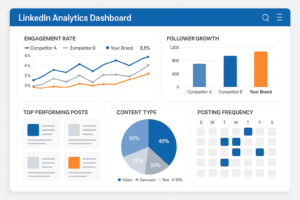
Key Statistics (2025)
- 1+ billion members globally
- 97% of B2B marketers use LinkedIn for content marketing
- 90% of B2B decision-makers say referrals from LinkedIn connections are effective
- Companies posting weekly see 5x follower lift
- 71% of B2B marketers include LinkedIn in their advertising strategy
What to Analyze
- Content Mix: Track competitor ratios of thought leadership posts vs. product promotions vs. company updates
- Engagement Patterns: Comments and shares matter more than likes on LinkedIn
- Newsletter Performance: 184,000+ newsletters are now published on LinkedIn
- Video Strategy: Native videos get 5x more engagement than external links
- Posting Frequency: Top performers post 1-2x daily
Industry Applications
SaaS Companies: Monitor competitor webinar promotions, case study formats, and developer community engagement. Track which technical content drives the most saves (indicating reference value).
Architecture & Engineering: Analyze project showcase formats, technical diagrams, and partnership announcements. Note how competitors balance aesthetic visuals with technical specifications.
Healthcare: Study how competitors navigate HIPAA compliance in content, patient testimonials, and thought leadership around healthcare innovation.
AI Prompt for LinkedIn Analysis
Analyze [Competitor Name]'s LinkedIn strategy:
1. Identify their top 10 posts by engagement in the last 90 days
2. Extract content themes and formats (video, carousel, text-only)
3. Calculate their average posting frequency and optimal posting times
4. Analyze their hashtag strategy and audience demographics
5. Identify gaps in their content calendar
6. Provide 5 actionable tactics we can implement immediately

Output as: Executive Summary | Data Visualization | Action Items
Real Example: A logistics company used this prompt to discover their competitor was neglecting sustainability content despite it being a top hashtag in their industry. They filled that gap and gained 400 new followers in 30 days.
Instagram: Visual Storytelling Champion
Key Statistics (2025)
- 2 billion monthly active users
- 33% of B2B companies are now on Instagram (rising)
- 69% of social users see the most engaging brand content on Instagram
- 29% of users make purchases directly on Instagram
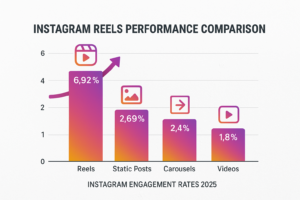
- Reels engagement rate: 6.92% (up from 4.5% in 2023)
- Carousel posts: 2.4% engagement rate (highest among post types)
What to Analyze
- Content Format Performance: Reels vs. Carousels vs. Static images
- Story Utilization: 500 million daily Story users
- Hashtag Strategy: Posts with 1-3 hashtags generate highest impressions
- Shopping Features: Product tags and shoppable posts
- UGC Integration: User-generated content and influencer partnerships
Industry Applications
Real Estate: Analyze competitor property showcase Reels, virtual tour formats, neighborhood highlight Stories, and client testimonial carousel posts.
Sustainable Products: Study how competitors showcase product lifecycle, behind-the-scenes manufacturing, sustainability certifications, and eco-friendly packaging.
B2C Startups: Monitor competitor product launch campaigns, influencer collaborations, unboxing content, and customer review integrations.
AI Prompt for Instagram Analysis
Conduct deep Instagram audit for [Competitor Name]:
1. Analyze last 50 posts: identify top 3 content pillars
2. Calculate engagement rate for Reels vs. Carousels vs. Static posts
3. Extract their hashtag patterns and effectiveness
4. Identify their posting schedule and consistency
5. Evaluate Story highlights structure and CTAs
6. Map their customer journey touchpoints on Instagram
7. Recommend content formats we're missing

Include: Engagement benchmarks | Visual style analysis | Opportunity matrix
Real Example: A packaging company analyzed competitors and found that “unboxing experience” Reels were getting 3x engagement of standard product photos. They pivoted to this format and saw a 220% increase in Story replies.
Facebook: Cross-Generational Reach
Key Statistics (2025)
- 3.065 billion monthly active users (still #1 globally)
- Average engagement rate: 0.09% for retail brands
- CTR benchmark: 1.49%
- Average CPC: $0.44
- 28% of brands use Facebook for influencer campaigns
What to Analyze
- Group Strategy: Competitor community building efforts
- Video Content: Live streams and pre-recorded videos
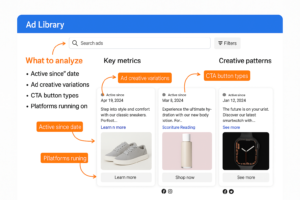
- Ad Creative: Analyze paid campaigns visible in Ad Library
- Customer Service: Response times in comments and Messenger
- Event Promotion: How competitors leverage Facebook Events
Industry Applications
Manufacturing: Track how competitors use Facebook Groups for customer support, product updates in manufacturing communities, and industry event promotions.
Healthcare: Monitor health education content, patient community engagement, appointment booking integrations, and telehealth service promotion.
Logistics: Analyze shipping update communications, driver recruitment campaigns, and B2B partnership announcements.
AI Prompt for Facebook Analysis
Facebook competitive intelligence for [Competitor Name]:
1. Access Facebook Ad Library: catalog all active ad campaigns
2. Analyze their organic post types and engagement patterns
3. Evaluate their Group strategy (if applicable)
4. Review customer service response quality in comments
5. Identify their video content strategy
6. Calculate their posting frequency vs. our own
7. Extract seasonal campaign patterns

Deliver: Ad creative themes | Content calendar gaps | Response time benchmarks
TikTok: The Unexpected B2B Channel
Key Statistics (2025)
- 1.58 billion monthly active users
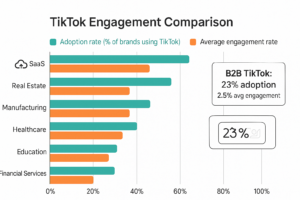
- 23% of B2B brands now use TikTok for marketing
- Average engagement rate: 2.5% (highest among all platforms)
- Global ad revenue: $23.3 billion in 2024, projected to reach $34.8 billion by 2026
- Users spend 95 minutes per day on TikTok
- 92% of users take action after watching a video
What to Analyze
- Trend Participation: Which trending sounds/hashtags competitors use
- Educational Content: How-to videos and industry tips
- Behind-the-Scenes: Company culture and process videos
- Influencer Partnerships: B2B creator collaborations
- TikTok Shop Integration: E-commerce features (if applicable)
Industry Applications
SaaS: Study competitor product demos in under 60 seconds, customer success stories, tech tips, and developer community content.
Engineering & Industrial: Analyze process videos, machinery demonstrations, safety protocols, and innovation showcases.
B2C Startups: Monitor product launch teasers, founder storytelling, customer unboxings, and trend-jacking campaigns.
AI Prompt for TikTok Analysis
TikTok competitive strategy analysis for [Competitor Name]:
1. Identify their top 20 videos by views and engagement
2. Extract trending sounds/hashtags they've successfully used
3. Analyze their video length patterns and hook strategies
4. Evaluate their comment engagement and community building
5. Identify content themes: educational vs. entertainment vs. promotional
6. Map their posting consistency and optimal times
7. Detect gaps in trending topics they're missing

Format: Trend opportunity matrix | Hook formulas | Content pillars breakdown
Real Example: An industrial machinery company analyzed TikTok and found competitors were successfully using “satisfying manufacturing process” videos. They replicated this approach and their first video went viral with 2.3M views, generating 156 qualified leads.
Twitter/X: Real-Time Intelligence
What to Analyze
- Tweet Velocity: Frequency and timing patterns
- Thread Strategies: How competitors use long-form Twitter threads
- Engagement Tactics: Polls, questions, and conversation starters
- Crisis Response: How competitors handle negative feedback
- Partnership Announcements: B2B collaborations and integrations
AI Prompt for Twitter Analysis
Twitter/X competitive monitoring for [Competitor Name]:
1. Analyze their top 30 tweets by engagement (last 60 days)
2. Identify their tweet frequency and optimal posting windows
3. Extract their most effective hashtags and @mentions
4. Evaluate their customer service response patterns
5. Identify trending topics they participate in vs. ignore
6. Analyze their thread strategies and storytelling formats
7. Map their thought leadership positioning

Output: Tweet template library | Engagement tactics | Conversation opportunities
Reddit & Quora: Community Intelligence
Why It Matters
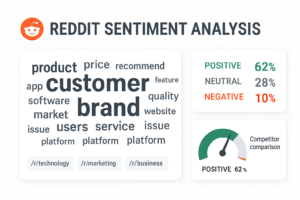
These platforms reveal what your audience is actually asking and which brands provide helpful answers.
What to Analyze on Reddit
- Subreddit Presence: Which communities mention your competitors
- Discussion Themes: Common pain points and questions
- Brand Sentiment: How communities perceive competitors
- AMA Strategies: Ask Me Anything session effectiveness
What to Analyze on Quora
- Question Topics: What prospects are searching for
- Answer Quality: How competitors position their expertise
- Topic Authority: Spaces where competitors are active contributors
- Traffic Sources: Which answers drive website visits
AI Prompt for Community Analysis
Reddit and Quora competitive intelligence:
1. Identify top 10 subreddits where [Industry] discussions happen
2. Find all mentions of [Competitor Name] in these communities
3. Extract common pain points discussed in these threads
4. Analyze competitor response strategies (if they participate)
5. On Quora: find top questions related to [Industry]
6. Evaluate competitor answer formats and engagement
7. Identify unanswered questions we can dominate

Deliver: Community sentiment report | Content opportunity gaps | Answer templates
Industry-Specific Competitor Analysis Strategies
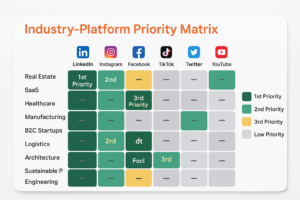
Real Estate
Primary Platforms: Instagram (visual listings), Facebook (local community groups), YouTube (virtual tours)
Key Metrics to Track:
- Property showcase formats (carousel vs. Reels vs. Stories)
- Neighborhood content strategies
- Client testimonial presentation
- Virtual tour engagement rates
Winning Tactic Example: A real estate agency analyzed competitors and found that “day in the life of a neighborhood” Reels outperformed property tours by 340%. They shifted 60% of content to lifestyle-focused videos and doubled their lead generation.
SaaS
Primary Platforms: LinkedIn (thought leadership), Twitter (product updates), YouTube (tutorials)
Key Metrics to Track:
- Product demo formats and length
- Customer case study structures
- Technical content vs. business value content ratio
- Community engagement tactics
Winning Tactic Example: A CRM SaaS company discovered competitors were neglecting short-form “quick tip” videos. They created a “60-second SaaS tips” series on LinkedIn and TikTok, growing their audience by 5,000 in 8 weeks.
Architecture
Primary Platforms: Instagram (project showcases), Pinterest (design inspiration), LinkedIn (B2B partnerships)
Key Metrics to Track:
- Project documentation styles
- 3D rendering vs. photography ratios
- Client collaboration storytelling
- Sustainability messaging
Logistics
Primary Platforms: LinkedIn (B2B connections), Facebook (driver recruitment), Twitter (service updates)
Key Metrics to Track:
- Technology innovation messaging
- Sustainability and carbon footprint content
- Behind-the-scenes operational content
- Customer success stories
Packaging & Engineering
Primary Platforms: LinkedIn (industry leadership), Instagram (product photography), TikTok (manufacturing processes)
Key Metrics to Track:
- Technical specification presentation
- Sustainability certifications showcase
- Innovation announcements
- Manufacturing process videos
Sustainable Products
Primary Platforms: Instagram (lifestyle content), TikTok (education), Pinterest (sustainability tips)
Key Metrics to Track:
- Certification and transparency content
- Lifecycle storytelling
- Influencer collaboration strategies
- Community engagement around values
Manufacturing
Primary Platforms: LinkedIn (B2B), YouTube (detailed demos), TikTok (process videos)
Key Metrics to Track:
- Equipment showcase strategies
- Safety and compliance content
- Innovation announcements
- Recruitment content
Healthcare
Primary Platforms: LinkedIn (thought leadership), Facebook (community support), Instagram (patient education)
Key Metrics to Track:
- Educational content formats
- Patient testimonial approaches (HIPAA-compliant)
- Provider profiles and expertise showcase
- Health tips and preventive care content
B2C Startups
Primary Platforms: TikTok (viral growth), Instagram (community building), Twitter (customer service)
Key Metrics to Track:
- Product launch campaign structures
- User-generated content strategies
- Influencer partnership ROI
- Community engagement tactics
Essential Metrics to Track Across All Platforms
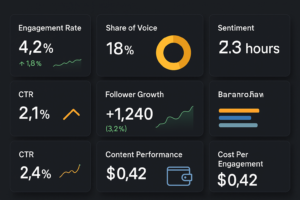
1. Engagement Rate
Formula: (Total Engagement / Total Followers) × 100
Industry Benchmarks (2025):
- TikTok: 2.5% average
- Instagram: 0.45-0.58% (declining in 2025)
- Facebook: 0.09% retail
- LinkedIn: Higher for thought leadership content
Why It Matters: Reveals content resonance beyond vanity metrics.
2. Share of Voice (SOV)
Definition: Your brand mentions vs. competitor mentions across social platforms
How to Calculate: (Your Brand Mentions / Total Industry Mentions) × 100
Benchmark: Top industry leaders maintain 25-35% SOV in their niche.
3. Sentiment Analysis
Track the tone of conversations:
- Positive mentions
- Neutral mentions
- Negative mentions
Tool Recommendation: Use sentiment analysis features in Sprout Social, Brandwatch, or Sociality.io
4. Response Time
Industry Benchmark: 74% of consumers expect responses within 24 hours
Top performers respond within:
- 1-2 hours for customer service issues
- 24 hours for general inquiries
5. Content Type Performance
Track which formats drive best results:
Instagram:
- Reels: 6.92% engagement rate
- Carousels: 2.4% engagement rate
- Static photos: 2.69% engagement rate
LinkedIn:
- Video: 5x more engagement than links
- Native uploads vs. external shares
TikTok:
- Video length sweet spot: 21-34 seconds for highest completion rate
6. Follower Growth Rate
Formula: ((New Followers – Lost Followers) / Total Followers) × 100
Healthy Benchmark: 1-3% monthly growth for established brands
7. Click-Through Rate (CTR)
Platform Benchmarks (2025):
- Facebook ads: 1.49%
- Instagram Feed ads: Lower than Facebook but higher quality
- LinkedIn: Higher for B2B content
8. Cost Per Engagement (CPE)
Platform Benchmarks:
- TikTok: $0.27
- Instagram: $0.03-$0.08
- Facebook: $15.30 (influencer campaigns)
AI-Powered Tools for Competitor Analysis
All-in-One Platforms
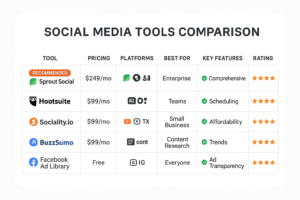
| Tool | Pricing | Platforms | Best For | Key Features | Rating |
|---|---|---|---|---|---|
| Sprout Social | $249/mo | All | Enterprise | Comprehensive | ⭐⭐⭐⭐⭐ |
| Hootsuite | $99/mo | All | Teams | Scheduling | ⭐⭐⭐⭐ |
| Sociality.io | $99/mo | FB/IG/YT | Small Business | Affordability | ⭐⭐⭐⭐ |
| BuzzSumo | $99/mo | Content | Content Research | Trends | ⭐⭐⭐⭐ |
| Facebook Ad Library | Free | FB/IG | Everyone | Ad Transparency | ⭐⭐⭐⭐ |
1. Sprinklr
- Best For: Enterprise-level analysis across all platforms
- Key Features: Real-time monitoring, sentiment analysis, share of voice tracking
- Pricing: Enterprise (contact for quote)
- Learn More
2. Sociality.io
- Best For: Facebook, Instagram, YouTube, Twitter analysis
- Key Features: Automated reports, competitor content tracking, historical data
- Pricing: Starts at $99/month
- Learn More
3. Hootsuite
- Best For: Multi-platform scheduling with competitor insights
- Key Features: Performance benchmarking, competitor reports
- Pricing: Professional $99/month, Team $249/month
- Learn More
4. Sprout Social
- Best For: Comprehensive analytics and reporting
- Key Features: Competitor reports track audience growth, engagement, post volume
- Pricing: Standard $249/user/month
- Learn More
Platform-Specific Tools
Instagram & Facebook:
- Socialinsider – Advanced benchmarking
- NapoleonCat – Competitor analytics across Facebook, Instagram, YouTube
LinkedIn:
- Shield Analytics – LinkedIn-specific competitor tracking
- Dux-Soup – LinkedIn automation and tracking
TikTok:
- Analisa.io – TikTok profile and hashtag analysis
- Exolyt – TikTok analytics and competitor tracking
YouTube:
- Social Blade – Channel statistics and growth projections
- TubeBuddy – Competitor video analysis
Twitter/X:
- Brandwatch – Social listening and sentiment analysis
- Mentionlytics – Real-time monitoring
Free Tools
- Facebook Ad Library – View all active competitor ads
- Google Trends – Track search interest over time
- Answer the Public – Discover questions people ask
- BuzzSumo (limited free) – Content research
- Ubersuggest – Competitor keyword analysis
AI Prompts for Comprehensive Competitor Analysis
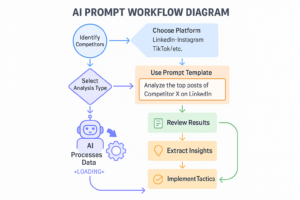
Master Analysis Prompt
You are a social media strategist specializing in competitive intelligence.

Task: Conduct a comprehensive social media competitor analysis for [Your Company] in the [Industry] sector.

Competitors to analyze: [Competitor 1], [Competitor 2], [Competitor 3]

Platforms to evaluate: LinkedIn, Instagram, Facebook, TikTok, Twitter

For each competitor, provide:

1. CONTENT STRATEGY ANALYSIS
- Top 5 content themes
- Content format distribution (video/image/text/carousel)
- Posting frequency per platform
- Best performing post types

2. ENGAGEMENT METRICS
- Average engagement rate per platform
- Peak engagement times
- Most engaged content examples
- Audience interaction patterns

3. AUDIENCE INSIGHTS
- Demographics (if visible)
- Growth trends (followers over time)
- Community sentiment
- Key audience pain points they address

4. COMPETITIVE ADVANTAGES
- What they do better than us
- Unique value propositions
- Content gaps they're filling

5. OPPORTUNITIES FOR US
- Content themes they're neglecting
- Underutilized platforms
- Audience segments they're missing
- Emerging trends they haven't adopted

6. ACTIONABLE RECOMMENDATIONS
- 10 specific tactics we should implement immediately
- Content calendar suggestions
- Platform prioritization strategy
- Resource allocation recommendations

Format the output as:
- Executive Summary (200 words)
- Detailed Analysis (by competitor)
- Opportunity Matrix (visual format)
- 90-Day Action Plan

Include data visualizations where possible.
Content Gap Analysis Prompt
Analyze content gaps in [Industry] social media landscape:

1. Review [Competitor 1], [Competitor 2], [Competitor 3] content from last 6 months
2. Identify topics they frequently cover
3. Find trending industry topics NONE of them are addressing
4. Discover questions audiences are asking but not getting answered
5. Evaluate content formats competitors underutilize
6. Recommend 15 unique content ideas we can own

Output format:
- Competitor content heatmap
- Untapped topic list (ranked by opportunity)
- Content format recommendations
- Monthly content calendar template
Platform-Specific Deep Dive Prompt
Deep dive competitor analysis on [Platform]:

Competitor: [Name]
Time Period: Last 90 days

Extract and analyze:
1. All posts with engagement above their average
2. Hashtag performance patterns
3. Visual style and branding consistency
4. Caption length and structure
5. Call-to-action strategies
6. Community management approach
7. Paid vs. organic content ratio
8. Collaboration and partnership tactics

Deliver:
- Top 10 winning post formulas
- Hashtag strategy template
- Visual style guide comparison
- Engagement optimization checklist
- 30 content ideas inspired by gaps
Sentiment & Crisis Analysis Prompt
Analyze brand sentiment and crisis management for [Competitor]:

1. Monitor mentions across all platforms from last 12 months
2. Categorize sentiment: positive/neutral/negative (with percentages)
3. Identify any crisis moments and how they responded
4. Evaluate their customer service quality
5. Analyze common customer complaints
6. Review how they handle negative feedback
7. Identify opportunities from their weaknesses

Output:
- Sentiment timeline visualization
- Crisis response playbook comparison
- Customer pain points they're not addressing
- Service level improvement opportunities for us
Influencer Partnership Analysis Prompt
Analyze influencer marketing strategy for [Competitor]:

1. Identify all influencer collaborations in last 6 months
2. Categorize influencers: nano/micro/macro/mega
3. Evaluate campaign types and formats
4. Estimate engagement impact of each partnership
5. Calculate approximate ROI indicators
6. Identify influencers they've worked with multiple times
7. Find successful influencers they haven't partnered with yet

Deliver:
- Influencer partnership map
- Campaign effectiveness analysis
- Untapped influencer opportunities
- Partnership strategy recommendations
90-Day Competitor Analysis Action Plan
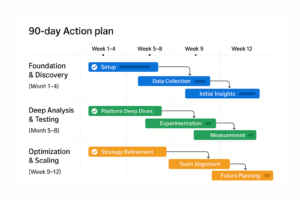
Month 1: Foundation & Discovery
Week 1: Setup
- [ ] Define 3-5 primary competitors
- [ ] Select analysis tools (recommend starting with 1 paid + free tools)
- [ ] Create competitor tracking spreadsheet
- [ ] Set up social listening for competitor brand names
Week 2: Data Collection
- [ ] Document competitor presence across all platforms
- [ ] Collect follower counts and growth trends
- [ ] Download their top 20 posts per platform
- [ ] Create baseline metrics dashboard
Week 3: Content Analysis
- [ ] Categorize competitor content themes
- [ ] Analyze posting frequencies
- [ ] Identify their content pillars
- [ ] Note their engagement patterns
Week 4: Initial Insights
- [ ] Create first competitor analysis report
- [ ] Identify 3 quick wins to implement
- [ ] Present findings to team
- [ ] Adjust tracking methodology based on learnings
Month 2: Deep Analysis & Testing
Week 5-6: Platform Deep Dives
- [ ] Complete LinkedIn competitive analysis
- [ ] Complete Instagram competitive analysis
- [ ] Complete Facebook competitive analysis
- [ ] Complete TikTok competitive analysis (if relevant)
Week 7: Experimentation
- [ ] Test competitor successful content formats
- [ ] Launch 3 experiments based on competitor insights
- [ ] A/B test messaging approaches
- [ ] Try competitors’ best-performing hashtags
Week 8: Measurement
- [ ] Compare our performance to competitors
- [ ] Calculate our share of voice
- [ ] Measure experiment results
- [ ] Refine strategy based on data
Month 3: Optimization & Scaling
Week 9-10: Strategy Refinement
- [ ] Double down on winning tactics
- [ ] Eliminate underperforming approaches
- [ ] Develop unique positioning angles
- [ ] Create content differentiation plan
Week 11: Team Alignment
- [ ] Train team on competitor insights
- [ ] Establish ongoing monitoring protocols
- [ ] Create competitor update cadence
- [ ] Assign tracking responsibilities
Week 12: Future Planning
- [ ] Create 6-month competitor monitoring roadmap
- [ ] Set quarterly review schedule
- [ ] Establish KPI tracking automation
- [ ] Plan competitive advantage initiatives
Ongoing: Monthly Maintenance
Every Month:
- Update competitor metrics dashboard
- Review new competitor campaigns
- Adjust strategy based on competitor movements
- Identify emerging competitors
Quarterly:
- Comprehensive competitive analysis report
- Strategy adjustment workshop
- ROI evaluation of competitive tactics
- Platform prioritization review
Conclusion: From Analysis to Market Leadership
Social media competitor analysis isn’t about copying what others do—it’s about understanding the landscape so thoroughly that you can chart your own dominant path.
Key Takeaways:
- The Market is Growing: With the social media analytics market reaching $17.4 billion, investment in competitive intelligence is no longer optional.
- Platform Dynamics Are Shifting: LinkedIn dominance continues growing, TikTok has become a legitimate B2B channel (23% adoption), and Instagram Reels are crushing other content formats at 6.92% engagement.
- AI Changes Everything: Tools like TikTok Symphony are already driving
Author Bio
Comments (2)
Speak Your Mind

Want to grow your business online?
I’m Ahmed Sohail, and I’m helping businesses grow with determined results. My question is, does your business needs growth?
Contact Now
Nice & Insightful, Thanks Brother.
Thank you @Sidratul Hayat